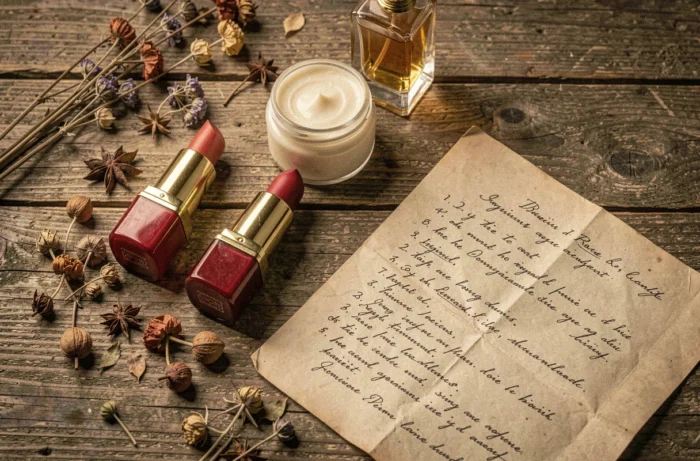
Does lipstick still contain whale fat? This question frequently arises on forums and social media. To answer it, we need to distinguish what formulations contained in the past, what regulations prohibit today, and what the tubes sold on shelves actually contain. This article compares historical animal-derived ingredients to current components, relying on existing regulatory frameworks.
Animal-derived ingredients in lipstick: historical versus current formulations
| Ingredient | Origin | Historical Use | Current Status |
|---|---|---|---|
| Spermaceti | Sperm whale (skull wax) | Emollient, soft texture | Prohibited in industrial cosmetics |
| Whale oil | Cetacean fat | Greasy base, stabilizer | Prohibited (1972 Convention) |
| Ambergris | Intestinal secretions of the sperm whale | Fragrance fixative | Replaced by synthetic molecules |
| Beeswax | Bees | Structuring, thickening | Still widely used |
| Lanolin | Sheep sweat | Moisturizing, film-forming | Present in many formulas |
| Animal squalene | Shark liver | Emollient, texture agent | Gradually replaced by plant-derived squalane |
This table highlights a often overlooked point: whale derivatives have been absent from formulas for over fifty years. The International Convention for the Regulation of Whaling, enforced since 1972, cut off the supply of spermaceti and cetacean oil for the cosmetic industry.
The supposed link between whale fat and lipstick is therefore a matter of historical legacy, not a production reality. In contrast, other animal materials remain present in current formulations.
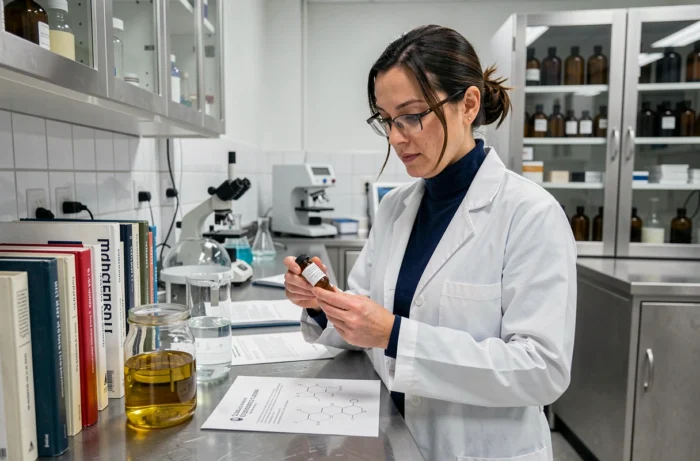
Beeswax, lanolin, squalene: the real animal ingredients to watch
The debate over whale fat masks a more concrete issue. Several animal-derived ingredients are still listed in the INCI list of lipsticks sold in retail.
Beeswax (cera alba) serves as a structuring agent. It gives the stick its hold and consistency. Lanolin, extracted from sheep sweat, acts as a moisturizer and film-forming agent. Shark liver squalene, although gradually replaced by plant-derived squalane (olive, sugarcane), has not completely disappeared from supply chains.
Traceability and labeling: the real issue
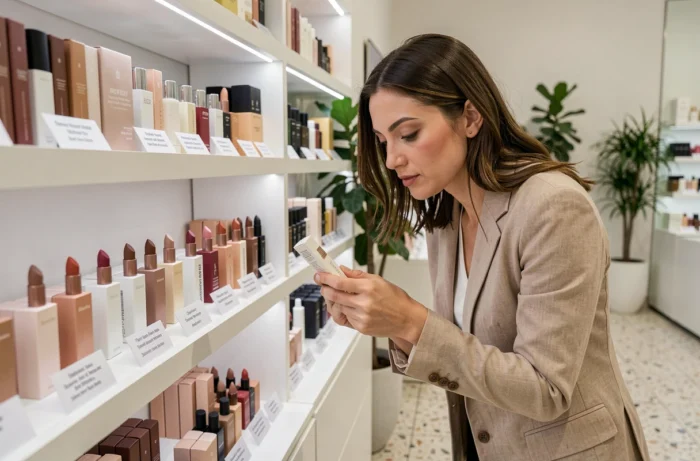
The INCI nomenclature requires listing each component, but it does not always specify the exact origin. A consumer might read “squalane” without knowing if it comes from a shark or an olive tree. The lack of obligation to mention the animal or plant origin of an ingredient complicates matters for anyone wishing to avoid animal derivatives.
Some labels provide a partial answer. Vegan certifications exclude any animal ingredient, including beeswax. Cruelty-free labels guarantee the absence of animal testing, without necessarily excluding animal raw materials. These two categories meet distinct criteria:
- A cruelty-free lipstick may contain beeswax or lanolin, as long as no animal testing has been conducted
- A vegan lipstick excludes any animal-derived material but may have been tested on animals in certain markets (notably for products exported to China before recent reforms)
- Only a product that combines both certifications guarantees the total absence of animal involvement in the formula and process
The distinction between vegan and cruelty-free remains poorly understood by the majority of consumers, which perpetuates confusion about the actual composition of products.
Plant and synthetic alternatives in modern lipsticks
The replacement of animal fats did not wait for consumer pressure. Manufacturers found effective substitutes, often cheaper and more stable.
Jojoba wax effectively replaces spermaceti as an emollient. Shea butter provides softness and hydration. Plant oils (grape seed, calendula, evening primrose) offer lipid profiles compatible with lipstick formulations. Hyaluronic acid, once extracted from rooster combs or cartilage, is now produced by bacterial fermentation in laboratories.
Synthetics versus naturals: a false dilemma
The opposition between “natural” and “synthetic” ingredients clouds the issue. A synthetic squalane of plant origin is chemically identical to its animal equivalent. The molecule bears no trace of its origin. What changes is the production cost, the environmental impact of the supply chain, and the traceability of sourcing.
Modern formulations often combine several of these alternatives:
- Jojoba wax or candelilla wax for the structure of the stick
- Shea butter or cocoa butter for hydration
- Plant oils (olive, coconut, grape seed) for glide and comfort
- Mineral pigments (iron oxides, titanium dioxide) for color
Health safety of lipstick: beyond animal origin
The composition of a lipstick raises questions that go beyond the mere presence of animal derivatives. Researchers from the School of Public Health at Berkeley detected, in a 2013 study, the presence of metals such as aluminum, cadmium, and chromium in several lipsticks and glosses. Lead has also been identified in low doses in a significant portion of the tested products.
Contamination by heavy metals, product alteration after prolonged opening, or the presence of preservatives like parabens pose documented risks, independent of the animal or plant origin of the components. A vegan lipstick is not automatically free from undesirable substances.
The issue of whale fat in lipstick has been settled since the 1970s. The real questions today concern the traceability of common animal derivatives, the readability of INCI labeling, and the monitoring of contaminants. Checking the ingredient list remains the most reliable action, whether the goal is to avoid animal materials or limit exposure to undesirable substances.