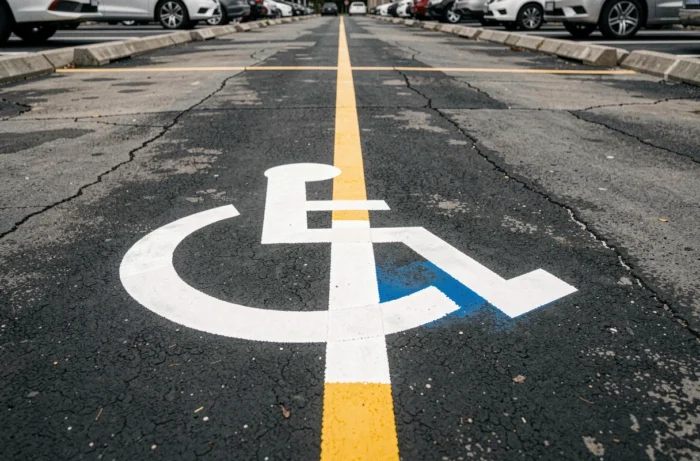
The white lines in your parking lot start to fade after a few months. Before repainting, the logical reflex would be to buy the same can again. Choosing the right parking lot marking paint is not random: the type of traffic, the nature of the surface, and the weather conditions determine the suitable formula. Choosing the wrong product means starting the project much sooner than expected.
Surface Preparation: The Step That Determines the Longevity of the Marking
No paint, even high-end, can compensate for a poorly prepared surface. A dusty, greasy, or cracked surface prevents the mechanical adhesion of the paint film. The marking then peels off in patches at the first stresses.
In practical terms, preparation involves three operations. First, a high-pressure cleaning to remove dust, moss, and oil residues. Next, targeted degreasing of the parking areas where vehicles leave fluid traces. Finally, repairing cracks and potholes; otherwise, the paint seeps into the hollows and loses its useful thickness.
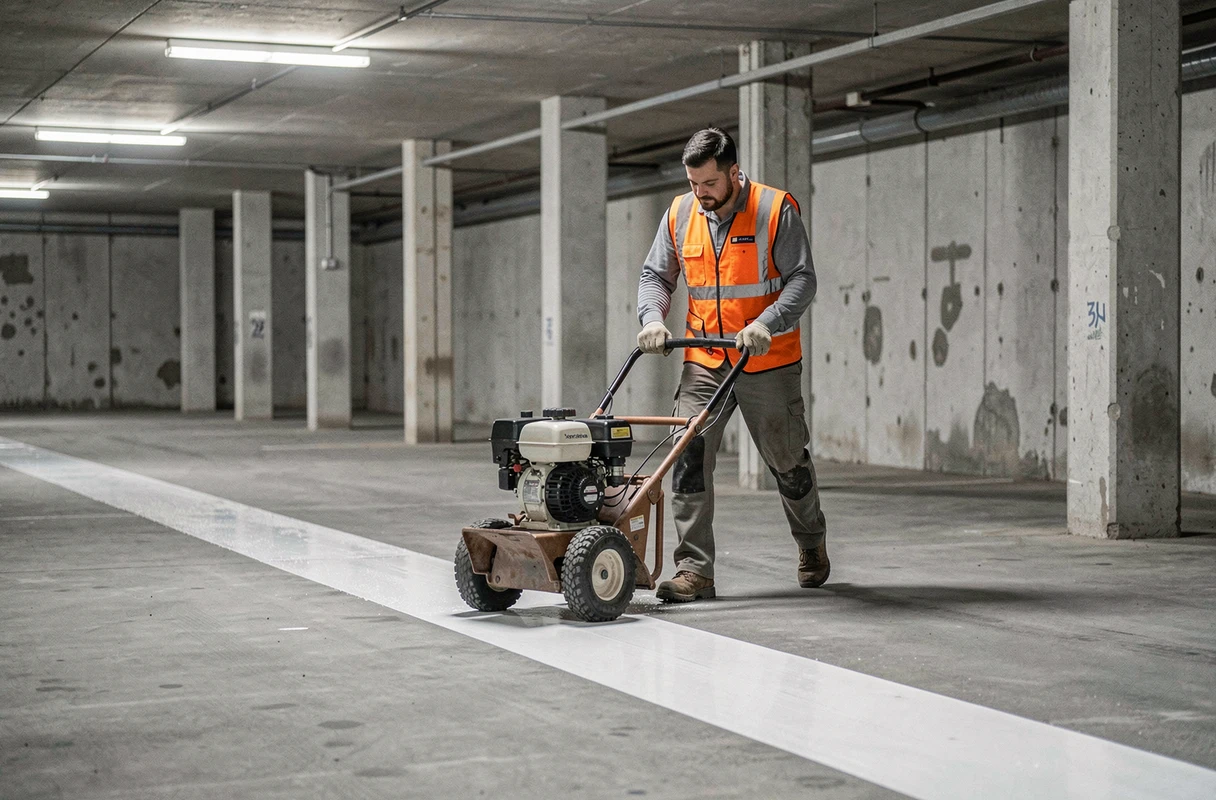
On smooth concrete (underground parking, industrial slab), a mechanical profiling or a bonding primer may be necessary. Smooth concrete offers too little roughness to hold a standard acrylic paint. Light shot blasting or the application of a primer creates the micro-roughness that allows the film to last several seasons.
Before investing in an expensive product, check the actual condition of your floor. A quick diagnosis (water absorption test, checking for laitance on new concrete) prevents wasting a paint budget on an unsuitable surface. To choose a durable parking lot marking paint, this preliminary step is as important as the product itself.
Acrylic, Polyurethane, or Resin: Which Product for Which Parking Lot
Are you managing a small condominium parking lot with about ten spaces? Or a commercial parking lot with vehicle traffic all day long? The answer points to very different product families.
Aqueous Phase Acrylic Paint
This is the most common product for outdoor floor marking. Acrylic paint dries quickly (between thirty minutes and two hours depending on the temperature), emits little odor, and contains few volatile organic compounds. It can be applied with a roller, an airless sprayer, or a line marker.
Acrylic is suitable for parking lots with moderate traffic: residences, local shops, visitors. On asphalt, a certified NF version resists UV and frost. However, in a parking lot subjected to heavy traffic (shopping center, logistics area), its lifespan remains limited.
Monocomponent Polyurethane Paint
A step up in terms of mechanical resistance. Monocomponent polyurethane paint offers better abrasion resistance and longer durability than acrylic. It also has a slip resistance level of R10 to R11, a criterion often overlooked but crucial for pedestrian safety in rainy weather.
Its cost per liter is higher, but the extra cost is offset by the frequency of refurbishment. For an outdoor parking lot with sustained traffic, it is often the best compromise between initial budget and overall cost over several years.
Bicomponent Epoxy Resin
Reserved for indoor parking lots (underground, covered garages). Epoxy resin forms a very hard film resistant to chemicals, oils, and forklift traffic. It does not withstand UV well: outdoors, it yellows and degrades quickly.
Epoxy is the logical choice for underground parking lots with heavy traffic, especially when heavy vehicles or handling equipment circulate regularly.
Traffic and Use: The Real Criterion for Choosing a Marking Paint
Comparisons often boil down to “indoor or outdoor.” This division is insufficient. The type of vehicles that circulate in your parking lot radically alters the mechanical constraints imposed on the marking.
- Pedestrian traffic only (access paths, walkways): a standard acrylic is sufficient, as mechanical wear remains low
- Private cars with moderate rotation (residential, office): NF certified acrylic on asphalt, polyurethane on smooth concrete
- Heavy vehicles, frequent deliveries, or forklifts: epoxy resin indoors, reinforced polyurethane outdoors, with a more generous layer thickness
Why this distinction? Because a several-ton forklift exerts ground pressure incomparable to that of a compact car. The weight and frequency of passage determine the required thickness and hardness of the marking system.
Regulatory Colors and Visibility of Floor Markings
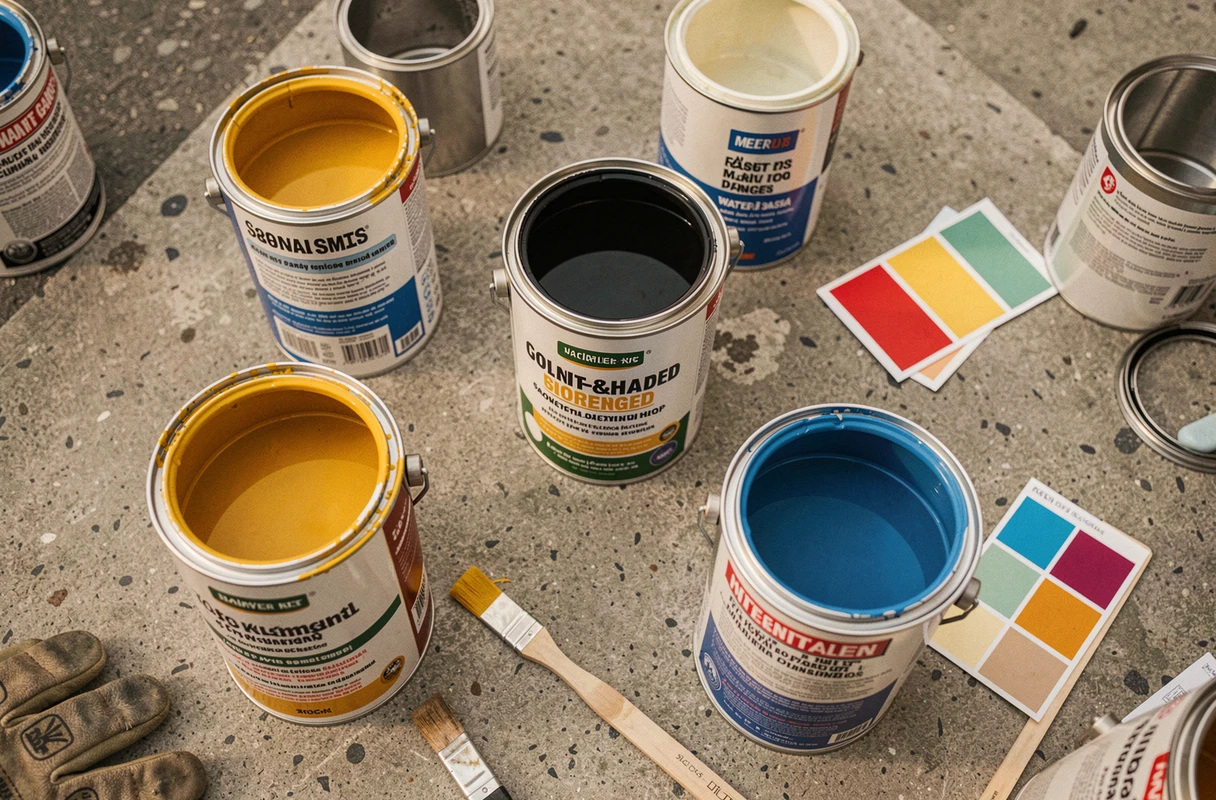
White remains the standard color for parking lines and directional arrows. Yellow is reserved for no-parking zones (border lines, delivery areas). Blue indicates spaces reserved for people with disabilities.
The shade is chosen according to RAL reference to ensure compliance. An non-compliant marking can engage the liability of the manager in the event of an accident in the parking lot. Check local requirements, as some municipalities impose specific colors for traffic lanes or drop-off zones.
Nighttime visibility also depends on retroreflection. In a parking lot open to the public at night, adding glass microbeads to the fresh paint improves visibility under headlights. This is not a cosmetic detail; it is a safety factor directly related to the choice of product.
Packaging and Application Equipment for Durable Marking
Marking paint comes in two main formats: the bucket (for application with a roller or line marking gun) and the aerosol (for occasional touch-ups or small areas).
- The bucket is suitable for large surfaces and allows precise control of layer thickness, a condition for the durability of the marking
- The aerosol is convenient for touch-ups, marking isolated arrows, or using with a stencil for pictograms (disability, bicycle, pedestrian)
- The handlebar line marker, powered by aerosols or a tank, ensures straight lines without special skills
The choice of packaging depends on the surface to be treated. For a parking lot with fewer than twenty spaces, the aerosol with a marker remains the most accessible. Beyond that, the airless sprayer with bucket paint offers better efficiency and a more uniform layer.
A well-executed parking lot marking relies on three decisions: a clean and stable surface, a product suitable for actual traffic, and sufficient layer thickness. Neglecting any of these three parameters reduces the lifespan of the marking, regardless of the budget invested in the paint.