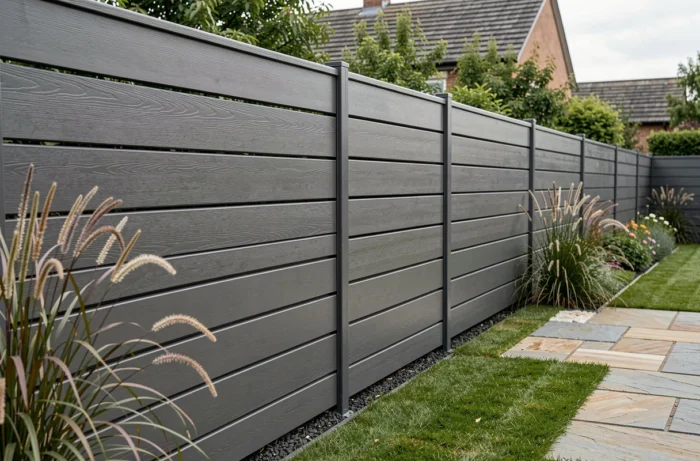
Comparing fencing materials involves measuring three variables: durability over time, cumulative maintenance cost, and compatibility with local urban planning regulations. Composite garden fencing positions itself on these three axes, but its actual performance depends on factors that product sheets do not always detail.
This article compares composite to natural wood and aluminum based on measurable criteria, then examines the constraints of the local urban planning regulations that may guide or even prohibit certain materials.
Composite, Wood, and Aluminum: Comparative Performance Table for Fencing
Before choosing a material, it is essential to outline the concrete differences. The table below summarizes the verifiable characteristics for a standard garden fence.
| Criterion | Composite (co-extruded) | Natural Wood (treated pine) | Aluminum |
|---|---|---|---|
| Moisture / insect resistance | Very high (360° shield) | Medium (treatment needed) | Very high |
| Regular maintenance | Cleaning with water | Stain or saturator every 2-3 years | Cleaning with water |
| Risk of discoloration | Low on co-extruded boards | High without UV treatment | Low (powder coating) |
| Customization (colors, finishes) | Wide range, wood imitation or solid colors | Limited to natural or painted | RAL colors, contemporary look |
| Eco-design | Wood fibers + recycled plastic | Renewable resource (if certified) | Recyclable, but energy-intensive extraction |
| PLU compatibility (heritage areas) | Sometimes rejected on the street | Generally accepted | Generally accepted |
Co-extruded composite stands out for its nearly zero maintenance and weather durability comparable to aluminum. However, aluminum retains the advantage in structural rigidity for tall heights exposed to wind.
To delve into the technical specifics and available ranges, a detailed file covers everything about composite garden fencing with concrete guidelines on installation and durability.
PLU Constraints on Fencing Material Choice
This is the point that most fencing guides overlook. The Local Urban Planning Plan of each municipality not only sets the maximum allowed height but may also restrict materials visible from the public road.
Height and Materials: What the PLU Requires
In residential areas, PLUs commonly set a limit of 1.80 m on the street side and 2 m on the garden back side. These thresholds vary from one municipality to another, and there is no national standard height applicable everywhere.
Some recent subdivision regulations explicitly prohibit opaque composite panels facing the street in favor of materials deemed more traditional. However, composite is generally accepted as a rear boundary in the vast majority of cases.
Heritage Areas and the Opinion of the Architect of Historical Monuments
In the surroundings of historical monuments or heritage areas, the Architect of Historical Monuments may impose materials such as stone, wrought iron, or natural wood. A composite fence that is too opaque or has a pronounced contemporary design risks being rejected on the street, even if a building permit is not required for a simple fence.
The steps to follow before purchasing composite boards:
- Consult the PLU of the municipality (available at the town hall or online) to check the heights and materials allowed on your plot
- Identify if the land is located in a heritage area, in a subdivision with specifications, or in a protected sector
- Submit a prior declaration of work if the PLU or local urban planning code requires it, which is common along public roads
Ignoring this step exposes you to a notice of demolition, even for a perfectly installed composite fence.
Cumulative Maintenance Over Ten Years: The Real Difference Between Composite and Wood
The main argument for composite relies on reduced maintenance. Rather than comparing technical sheets, it is more illustrative to project maintenance operations over a decade.
A natural wood type like autoclaved pine requires an application of stain or saturator every two to three years to maintain its appearance. Each layer involves several hours of work, light sanding, and the cost of the product. Over ten years, this represents three to five complete interventions.
Co-extruded composite only requires cleaning with clear water, possibly supplemented with a mild detergent. The recommended frequency is once or twice a year. No surface treatment is required throughout the panel’s lifespan.
In contrast, powder-coated aluminum shares this ease of maintenance. The difference lies in the finish: composite replicates the look and feel of wood, whereas aluminum retains a metallic appearance that some landscaping designs do not aesthetically tolerate.
Composite Boards and Exterior Design: What Influences the Choice
The design of a composite fence is not limited to the choice of color. Several technical parameters influence the final appearance and coherence with the garden layout.
- The orientation of the boards (horizontal or vertical) alters the perception of height and the screening of the panel
- The spacing between boards, adjustable on certain fixing systems, allows for a transition from a solid fence to a slatted screen
- Aluminum posts paired with composite boards offer superior rigidity compared to wood posts, especially in windy areas
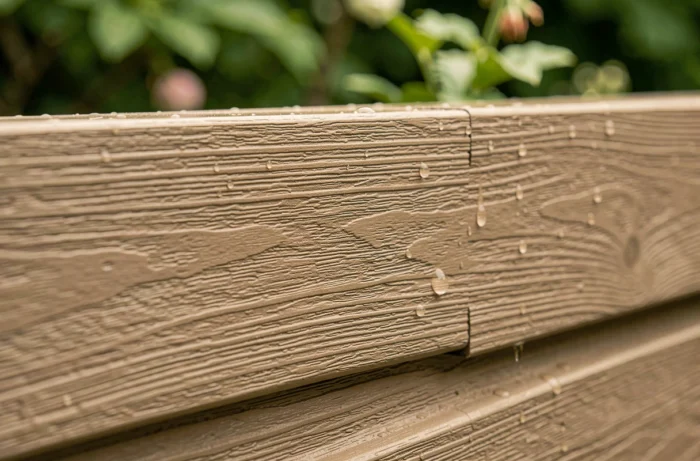
- Veined finishes imitate natural wood with increasing fidelity, while smooth finishes provide a more contemporary look
The choice between these options depends as much on the architectural style of the house as on boundary constraints. A solid dark composite fence absorbs light and can darken a small garden. A slatted composite screen, on the other hand, preserves brightness while ensuring visual separation.
Composite remains a material that combines wood fibers and recycled plastic, giving it a more favorable environmental balance than pure PVC, provided the manufacturer actually uses recycled materials and not just virgin plastic. Checking the product technical sheet on this point avoids marketing approximations.
Choosing a composite fence for your garden is justified by real maintenance differences and measurable durability compared to wood. The decisive factor, often overlooked, remains compliance with local PLU: a high-performing material installed in violation of regulations has no lasting value.