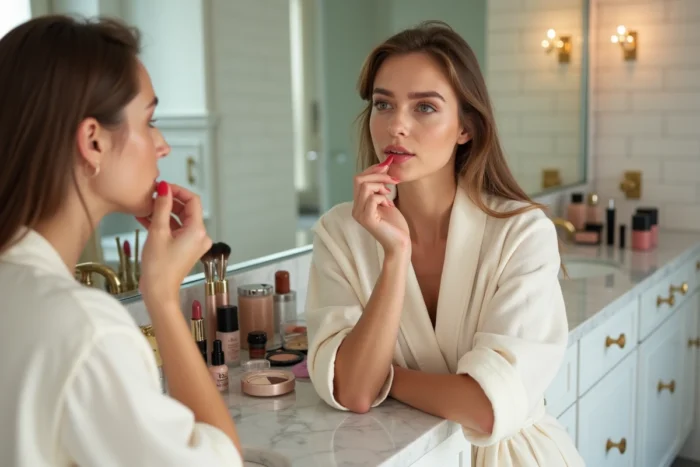
Makeup is going through a rare phase of polarization: on one side, the radical minimalism of Plain Jane make-up is gaining ground; on the other, colorful maximalism is exploding on TikTok with a growth of the hashtag #maximalistmakeup of +184.1% in one year. Between these two poles, what are the concrete benchmarks to distinguish a fundamental trend from a passing fad?
Minimalism vs. Maximalism: A Comparison of the Two Makeup Trends of 2026
Before choosing a side, a table helps visualize what opposes these two directions and what they share.
| Criterion | Plain Jane make-up (minimalist) | Colorful Maximalism |
|---|---|---|
| Philosophy | Enhancing the unique features of the face without hiding them | Artistic expression, bright colors, layering |
| Number of products | Three to five per routine | Eight or more, with varied textures |
| Time to achieve | Less than five minutes | Twenty minutes or more |
| Main distribution channel | TikTok, Instagram Reels | TikTok (Creative Makeup), Pinterest |
| Lineage | Clean beauty, green beauty post-lockdown | Break from the clean girl aesthetic |
The minimalist focuses on skin texture, embraced small asymmetries, and an almost bare complexion. The maximalist, on the contrary, layers pigments and claims a more artistic gesture. Both trends share a common point: they reject the lukewarm compromise of standardized “no-make-up make-up” that has dominated recent years.
To follow the latest makeup trends to discover, it is essential to identify in which category each product or technique fits, rather than accumulating purchases without coherence.
Plain Jane Make-up: Why This Minimalist Trend is Changing the Beauty Routine
The Plain Jane make-up is not just about using fewer products. Its principle is based on a documented psychological goal: to shed aesthetic injunctions to encourage a personal and unpretentious beauty routine. It is a step further than the clean girl, which remained very codified (even skin tone, brushed brows, nude gloss).
Specifically, the Plain Jane routine retains a tinted moisturizer, a lip balm, and possibly a mascara. Imperfections, freckles, and light dark circles are no longer corrected but left visible. This approach is appealing because it reduces the product budget and the time spent in front of the mirror.
Adapting Plain Jane to a Professional Context
The risk of this pushed minimalism is appearing “not ready” in a formal environment. A tip observed among enthusiasts is to enhance only the brows (clear setting gel) and apply a touch of cream blush on the cheeks. These two gestures are enough to structure the face without contradicting the philosophy of the movement.
Maximalist Makeup and Color: The Codes of Creative Makeup on TikTok
The other side of 2026 is the explosion of blue makeup and saturated palettes. Blue, long confined to the 80s, is returning in more refined forms: duck blue graphic liner, cobalt eyeshadow blended up to the temple, colored mascara.
This resurgence is part of a broader movement. An analysis by Inspiration Creation shows a clear departure from the clean girl aesthetic in favor of color and maximalism in the first half of 2026. Content creators are no longer content to replicate a tutorial: they assert makeup as an artistic medium.
Three Guidelines for Testing Maximalism Without Bad Taste
- Limit saturation to one area of the face (eyes or lips, not both at the same time) to maintain a readable focal point
- Work on color transitions with fingers or a large blending brush, which avoids the harsh lines typical of failed attempts
- Choose a creamy texture product rather than a powder one for beginners: the finish remains adjustable longer before setting
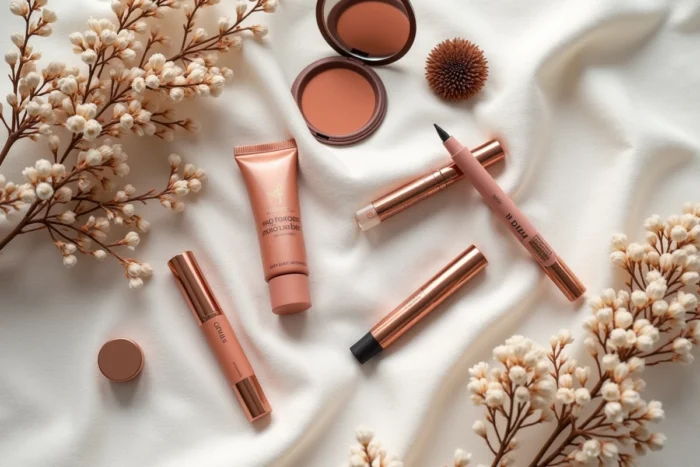
Beauty Product Innovations: What Distinguishes a True Novelty from a Repackaging
The global cosmetics market continues to grow. In this context, brands are multiplying launches. Not all “new products” are created equal. Some reformulate an existing product with updated packaging, while others introduce a true technical breakthrough.
Refillable cosmetics and solid formulas represent a structural change, not just a marketing argument. These formats reduce the volume of plastic per use and change the way we store and transport makeup.
Another strong signal: the rise of brands that integrate sustainability from the product’s design (formulation, sourcing, packaging) rather than at the end of the chain. This criterion allows for quick sorting between a truly innovative launch and a simple seasonal makeover.
Quick Evaluation Grid for a New Makeup Product
- Does the formula provide a measurable benefit compared to the previous version (wear, coverage, texture)?
- Is the packaging refillable or at least recyclable in existing streams?
- Does the product meet a real use or a TikTok trend whose lifespan is measured in weeks?
- Does the price reflect a formulation innovation or merely a brand positioning?
Lip and Eye Makeup: The Micro-Trends to Watch
Beyond the two main currents, several micro-trends deserve attention. Lipstick is returning in berry shades (deep red fruits), worn in a matte finish or a bitten lip look depending on the desired level of sophistication.
On the eye side, the classic smoky eye is making a comeback, but reimagined with unconventional pigments (khaki, plum, midnight blue) rather than the usual black. Colored mascara replaces liner as an entry point to color: easier to apply, more discreet, it allows for testing maximalism in homeopathic doses.
Brows remain a structuring element of the look. The brushed and gel-set trend persists, but very defined pencil shapes are losing ground to a softer line, in line with the minimalist wave.
Makeup in 2026 reads as a deliberate choice between radical sobriety and unabashed exuberance. The data that best summarizes this shift remains the spectacular growth of maximalism on social networks, coupled with the simultaneous emergence of Plain Jane. Two opposing directions, but a shared desire: to take control of one’s beauty routine rather than follow a single standard.