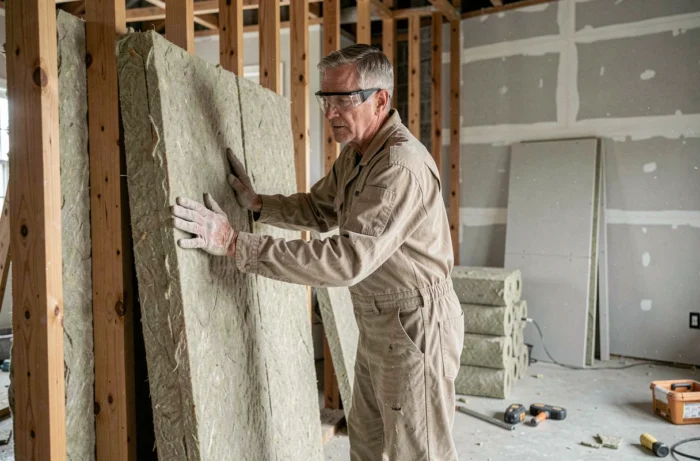
The insulation of a house is not just about laying down wool in the attic. It is a series of technical decisions that follow a specific order, and its effectiveness depends as much on the initial diagnosis as on the attention given to the details of implementation. Poorly sequenced or carried out without prior treatment of humidity, insulation work can lead to issues that are more costly than the expected savings.
Humidity and old houses: the diagnosis that no one wants to do first
Most content on insulation starts with the roof or walls. In practice, the first issue to address in an old home is often humidity. Untreated rising damp condemns any insulation placed on top. The insulation becomes saturated with water, loses its thermal properties, and promotes the growth of mold behind the cladding.
Before undertaking any internal or external insulation work, a diagnosis of the walls is essential: presence of infiltrations, humidity levels in the walls, condition of the masonry joints. In stone or rammed earth houses, the walls “breathe” naturally. Applying insulation without a continuous vapor barrier or without treating the junctions between walls and floors creates condensation points that degrade the structure in just a few years.
Professionals specializing in thermal renovation, such as those listed on maisonisor.fr, incorporate this diagnostic step before any recommendations for work. Without this analysis, the risk is spending money on insulation that degrades quickly.
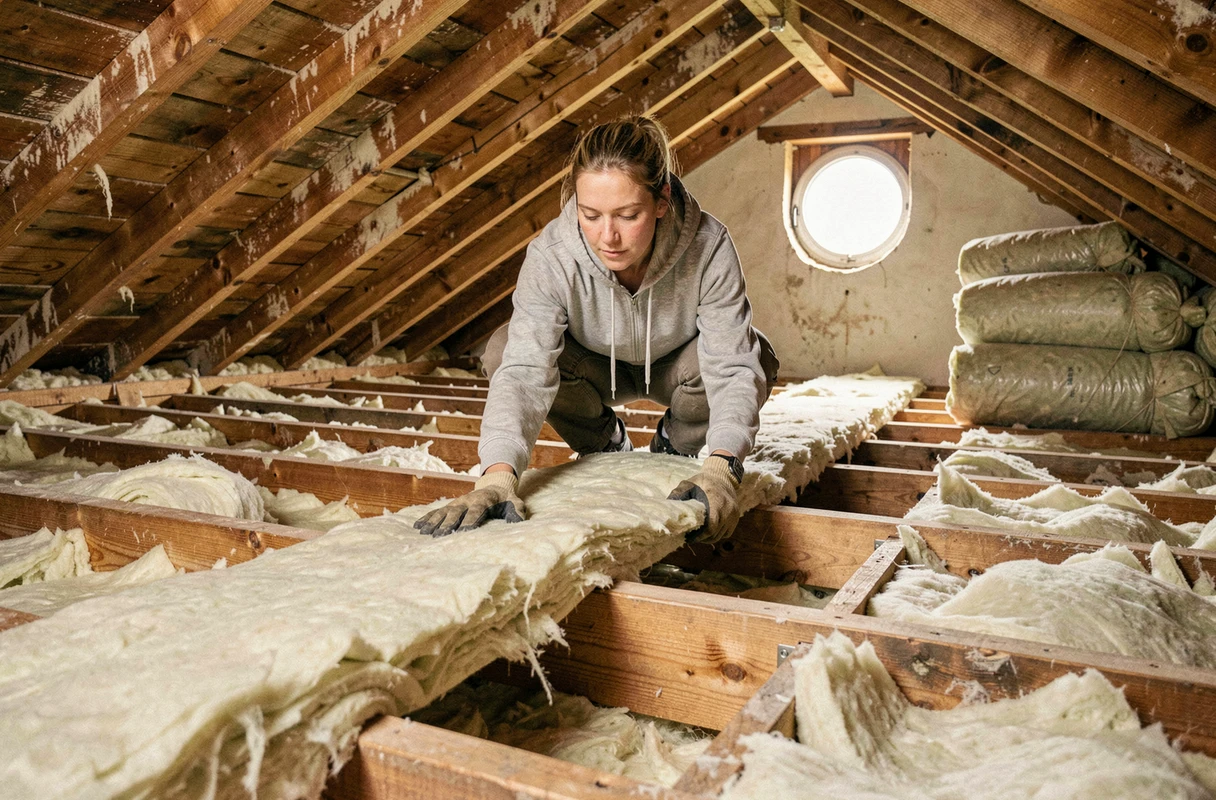
Order of insulation work: roof, walls, windows, floor
The order in which different surfaces of a home are insulated directly influences the profitability of the project. The most commonly recommended hierarchy follows the logic of thermal losses: roof and attic first, then walls, windows, and lower floor.
This sequence is not an absolute rule. If the roof has already been treated a few years ago, it is more relevant to focus the budget on the walls or joinery. Similarly, a home with single-glazed windows that allow massive drafts may justify a priority replacement, even if the attic is not perfectly insulated.
Adapting the sequence to the existing structure
A thermal audit allows for precise identification of loss areas. Field reports vary on this point: some craftsmen systematically recommend starting with the attic, while others adapt based on the actual condition of the home. The right approach is to prioritize the areas according to their measured impact, not according to a generic rule.
- Roof and attic: the first area of loss in most individual homes, to be treated as a priority unless already insulated
- Exterior walls: insulation from the inside (less expensive, but reduces living space) or from the outside (more effective against thermal bridges, higher budget)
- Windows and joinery: replacing single glazing with double or triple glazing reduces losses, but remains less cost-effective than insulating opaque surfaces
- Lower floor: often neglected, the ground represents a significant portion of heat leaks, especially in the presence of an unheated crawl space or basement
Thermal insulation and summer comfort: an issue that goes beyond heating
Thinking only in terms of heating savings ignores half the problem. Summer comfort has become a major criterion in recent recommendations. A poorly insulated roof turns the attic into an oven as early as June, and prolonged heat episodes make this defect increasingly costly (use of air conditioning, degradation of sleep, loss of productivity in remote work).
Prioritizing roof treatment thus serves a dual purpose: limiting heat loss in winter and preventing overheating in summer. Insulating materials with high inertia (wood fiber, cellulose wadding) offer better thermal lag than traditional fiberglass, meaning they slow down the penetration of heat more effectively.
In addition to insulation, external solar protections (shutters, blinds, bioclimatic pergolas) significantly contribute to summer comfort. Insulating without protecting openings from direct radiation remains a partial response.
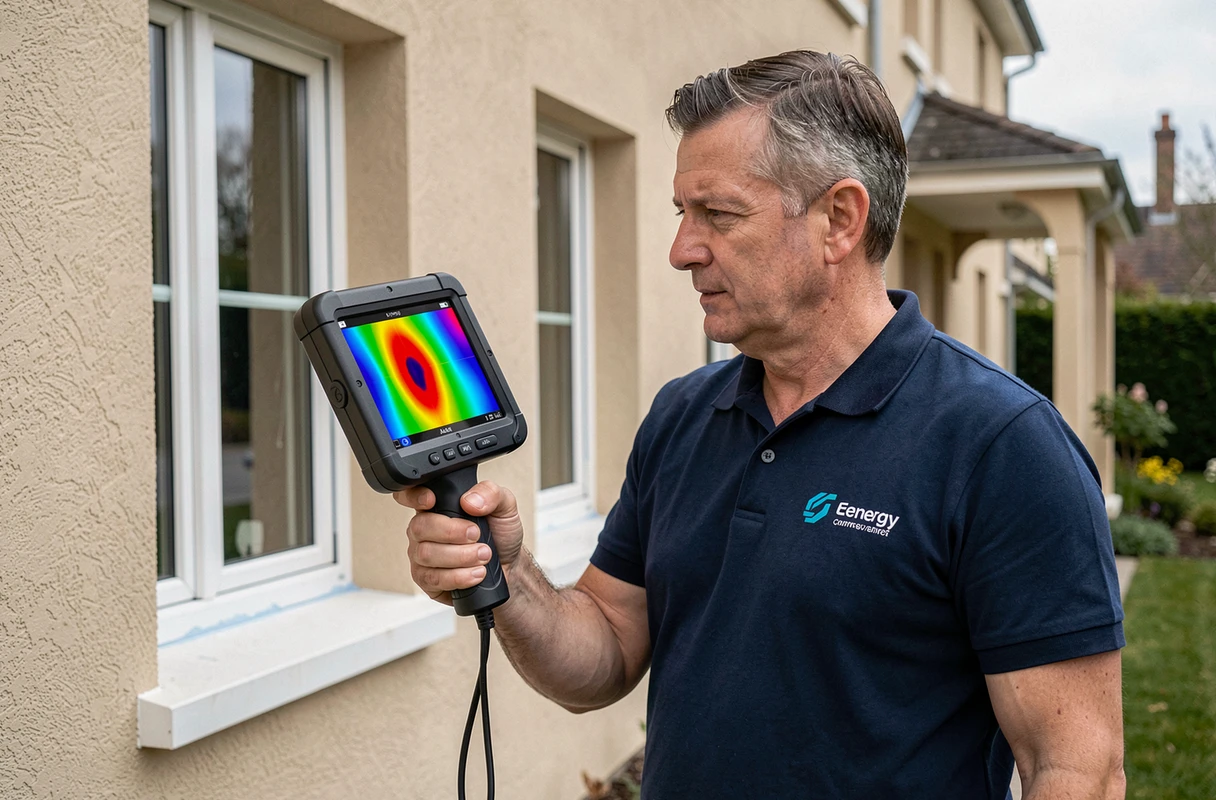
Ventilation and heating: the two parameters that determine return on investment
A well-insulated house but poorly ventilated accumulates indoor humidity. Without sufficient air renewal, condensation settles on the cold residual walls, the joinery, and sometimes even within the thickness of the insulation itself. Insulation alone is not enough to generate significant energy savings if the ventilation is not adapted to the new airtightness level of the home.
A properly sized single-flow mechanical ventilation system is the minimum requirement. In the context of an ambitious energy renovation, a double-flow mechanical ventilation system recovers some of the heat from the extracted air to preheat the incoming air, which amplifies the gains related to insulation.
Adjusting heating after insulation
After insulation work, the existing heating system is often oversized for the new needs of the home. A boiler calibrated to compensate for significant losses runs inefficiently in a better-insulated house, which degrades its performance.
- Have the necessary power reassessed by a heating engineer after insulation work
- Install a programmable thermostat to adjust the temperature to actual occupancy hours
- Check that the heat emitters (radiators, underfloor heating) are compatible with the new thermal needs
The return on investment for insulation depends as much on the quality of the installation as on the adjustment of the equipment that operates with it. Insulation, ventilation, and heating form an interdependent system. Addressing one area without touching the other two limits the results to a fraction of what could be achieved. It is this holistic approach, tailored to each structure, that distinguishes a successful thermal renovation from a mere addition of insulating material.