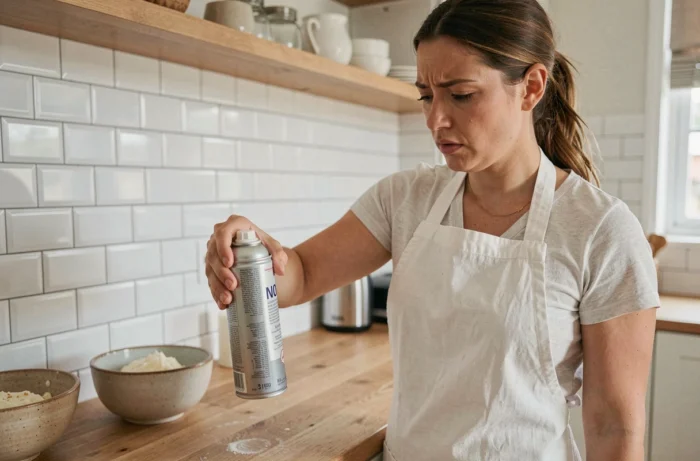
The nozzle is no longer dispensing anything, the canister still seems heavy, and the whipped cream is waiting. This blockage happens more often than one might think, and the cause is rarely a manufacturing defect. The problem almost always stems from a detail in handling or storage that prevents the propellant gas from doing its job. Understanding this mechanism allows you to resolve the situation with a few simple actions, without wasting the contents.
The role of the propellant gas in a whipped cream canister
Before looking for a solution, it’s essential to visualize what happens inside. A whipped cream canister contains two elements: liquid cream and a propellant gas, nitrous oxide (N2O, additive E942). This gas dissolves in the fat under pressure.
When you press the nozzle, the pressure drops suddenly. The dissolved gas is released and creates microbubbles in the cream, transforming it into airy foam. Without sufficient pressure, there is no foam: the cream remains liquid or simply does not come out.
Have you ever noticed that a canister turned upside down for a few seconds before use works better? That’s because the cream moves toward the valve, allowing the gas to push it out properly. If the canister is stored upright, the gas concentrates at the top and sometimes escapes without carrying any cream. This positioning detail is the primary cause of blockage and also the easiest to correct.
When you search for tips for a blocked whipped cream canister, this point consistently comes up, as it resolves the majority of malfunctions.
Clogged nozzle or stuck valve: identifying the mechanical blockage
If turning the canister doesn’t change anything, the problem is likely mechanical. Two parts account for most malfunctions: the nozzle (the tip from which the cream comes out) and the internal valve (the mechanism triggered when you press).
Clean the nozzle with hot water
The cream dries quickly when exposed to air. A hardened residue in the nozzle is enough to block the passage. The most effective solution:
- Remove the tip if your model allows it, then immerse it in a bowl of hot water for two to three minutes. The softened residues will dislodge easily.
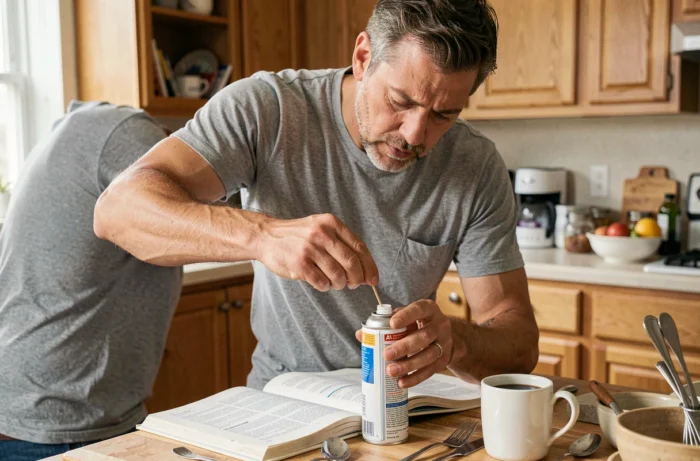
- Use a toothpick or a fine needle to clear any remaining particles from the opening. Do not force it: a too-rough motion can damage the nozzle.
- Replace the clean tip, shake the canister vigorously upside down, and then test again.
This quick cleaning resolves most blockages that occur after the first use, especially if the tip was not rinsed immediately after use.
Unclogging a stubborn valve
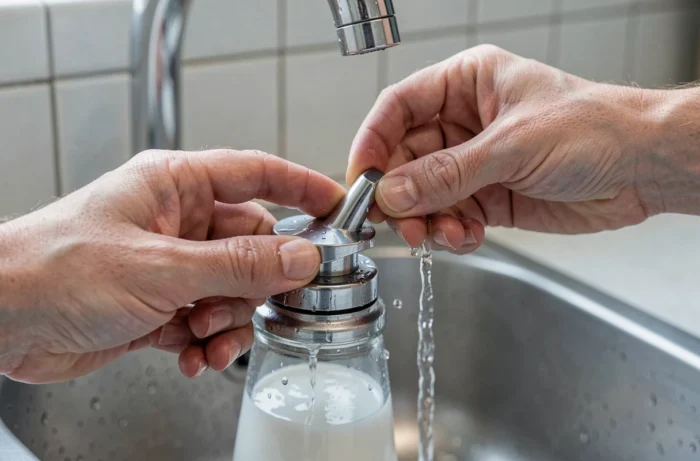
Sometimes the nozzle is clean, but nothing comes out. The valve may be stuck due to a deposit of dried cream around the mechanism. Firmly tap the bottom of the canister against your palm, upside down, five or six times. This vibration helps dislodge the internal residues that are blocking the flap.
If that’s not enough, run the canister under a stream of warm water at the valve for about thirty seconds. The heat slightly expands the mechanism and softens the deposits. Wipe, shake, and try again.
Refrigerator temperature and cream consistency
Have you checked the temperature of your canister before using it? A canister that is too cold produces a thick cream that struggles to come out. Conversely, a canister that is too warm releases gas without forming foam, as the cream can no longer hold the nitrous oxide properly.
The ideal operating range is around the standard temperature of a well-adjusted refrigerator. If your canister comes from a particularly cold part of the fridge, let it sit for a few minutes at room temperature before shaking and using it.
For a rechargeable siphon, the same principle applies. The preparation should be cold, but not icy. Shake the siphon upside down at least five to six times after loading the gas cartridge. This action forces the nitrous oxide to dissolve evenly in the cream. Without this step, the gas remains in the gaseous phase and comes out first, leaving the liquid cream at the bottom.
When the whipped cream canister is truly out of gas
Not all malfunctions can be resolved by cleaning. If the canister has been stored for a long time, the gas may have slowly leaked through a faulty seal. The test is simple: press the valve over a sink. If no air escapes, the propellant gas has completely escaped.
In this case, the cream remains inside in liquid form, with no way to propel it. For a rechargeable siphon, simply screw in a new cartridge. For a disposable canister, the situation is more complicated.
Some forums suggest puncturing the canister to retrieve the cream. This action carries a risk if residual pressure remains. If you choose to do this, use a standard can opener on the metal bottom, keeping your face away from the opening. The retrieved cream will be liquid and not whipped: you can whip it with an electric mixer or use it as is in a baking recipe.
Nitrous oxide and regulatory changes in France
The nitrous oxide used in these canisters is subject to increasing regulation. The RIPOST law plans to prohibit the sale of nitrous oxide to individuals starting February 1, 2027, except for regulated medical and professional uses. This measure targets the recreational diversion of the gas but will have concrete consequences on the market for whipped cream canisters and siphon cartridges.
Manufacturers will likely need to adapt their products, either by switching to other propellant gases or by restricting the sale of N2O cartridges to professionals. Alternatives like brick creams or siphons using CO2 may gain ground in home kitchens.
In the meantime, current canisters remain available and operate on the same principle. The best reflex to avoid blockages is to store the canister upside down in the refrigerator, rinse the nozzle after each use, and shake vigorously before serving. Three simple actions that prevent the vast majority of malfunctions.