Aging well is not just about a list of good habits. Since the law of April 8, 2024, France has a legal framework that redefines the prevention of loss of autonomy and the transparency of care facilities. Measuring what has changed allows us to distinguish generic recommendations from concrete levers that improve the daily lives of seniors.
Well-Aging Law 2024: What the 2026 Decrees Change Practically
The law no. 2024-317 of April 8, 2024 now structures public policies around three axes: prevention, good treatment, and financial programming for old age. Most articles on senior well-being have not yet integrated the implementing texts published since then.
A decree published in the Official Journal on August 9, 2026, requires nursing homes (EHPAD) to publicly disclose three indicators each year: staffing rate, absenteeism rate, and staff turnover rate. This data, submitted to the National Solidarity Fund for Autonomy (CNSA), allows families to compare facilities based on objective criteria.
A second decree, dated July 3, 2026, transforms the municipal register of vulnerable persons into a daily prevention tool. This register, initially designed for heatwave episodes, is now used for the early detection of loss of autonomy and regular monitoring by municipal services.
To delve deeper into these developments and find senior advice on Tranquilité Santé, it is useful to cross-reference medical recommendations with this new regulatory framework.
| Measure | Before the 2024 Law | After the 2026 Decrees |
|---|---|---|
| EHPAD Transparency | No obligation to publish indicators | Annual publication of 3 indicators (staffing, absenteeism, turnover) |
| Municipal Register | Limited to heatwave episodes | Regular monitoring and early detection of loss of autonomy |
| Good Treatment | Framework scattered across several texts | Dedicated title in the law, strengthened controls |
Prevention of Fragility: Key Indicators for Senior Health
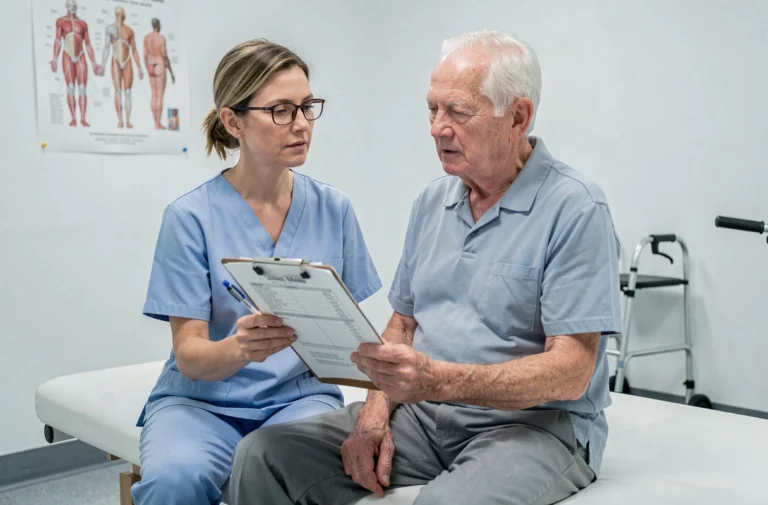
Fragility is not a binary state. It can be measured, and this is precisely what the ICOPE program of the World Health Organization proposes. This protocol assesses six functional capacities: mobility, cognition, vision, hearing, psychological state, and nutrition.
The benefit of this approach is that it detects signals of decline before chronic diseases appear. Acting at the pre-fragility stage significantly reduces the risk of loss of autonomy. In France, the Retirement Insurance offers this type of assessment in its prevention workshops.
Physical Activity and Balance: Beyond Daily Walking
Classic recommendations emphasize walking. Balance training and muscle strengthening are more important for fall prevention, the leading cause of loss of autonomy among the elderly.
- Strengthening the lower limbs (adapted squats, chair lifts) maintains muscle mass, which declines rapidly after age 70
- Proprioceptive exercises (standing on one foot, heel-to-toe walking) improve postural stability and reduce fracture risk
- Activities combining physical effort and cognitive stimulation (dance, tai chi) simultaneously affect motor skills and memory
However, poorly calibrated physical activity can worsen existing joint pathologies. A prior functional assessment remains the most reliable approach to adjust intensity.
Social Isolation of Seniors in France: An Underestimated Health Factor
Social isolation is not just a comfort issue. Its effects on physical and cognitive health are comparable to those of classic risk factors like sedentary behavior or an unbalanced diet.
Chronic loneliness accelerates cognitive decline and weakens the immune system. The Little Brothers of the Poor regularly document the extent of this phenomenon in France, particularly among people over 75 living alone.
Housing Adaptation: A Concrete Lever for Staying at Home
The majority of seniors wish to age at home. This aspiration often clashes with unsuitable housing. The most effective adaptations are not always the most expensive.
- Replacing the bathtub with a walk-in shower eliminates the main falling hazard in the home
- Installing grab bars in hallways and bathrooms secures daily movements
- Automatic motion-sensor lighting, especially at night, limits balance loss due to darkness
Adapting one’s home before the onset of loss of autonomy is cheaper and provides better protection than emergency renovations after a fall.

Nutrition and Aging: Key Deficiencies to Monitor
The energy expenditure of seniors is higher than that of young adults for the same physical activity. Reducing portions with age is therefore a common mistake.
Protein remains the most frequently insufficient nutrient after age 65. This deficiency accelerates muscle loss (sarcopenia) and worsens fragility. Eggs, fish, meat, and legumes should be included in every main meal.
Dehydration poses a different problem: the sensation of thirst decreases with age, making regular consumption of water, herbal teas, and soups all the more necessary. Waiting until one is thirsty to drink exposes one to the risk of chronic dehydration, an aggravating factor for confusion and falls.
The framework established by the well-aging law of 2024 and its 2026 decrees does not replace individual prevention actions, but it complements them with collective tools for monitoring and transparency. Cross-referencing public data from facilities with a personalized fragility assessment is the most coherent approach to preserving autonomy over time.