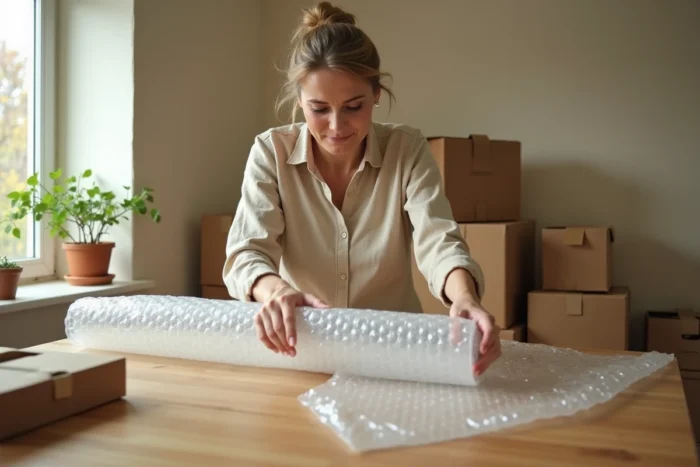
Are you preparing for a move or the shipping of fragile items, and the packing budget is rising even before you’ve filled the first box? Bubble wrap is an easy expense to reduce, provided you know where to collect this material for free near you. A few simple habits can help you gather enough quantities to protect dishes, frames, and electronic devices.
Parcel collection points and lockers: a daily source of bubble wrap
We rarely think of collection points as a source of free packaging. Yet, they are one of the most regular sources in terms of volume. Businesses affiliated with Mondial Relay, Relais Colis, or other networks receive dozens of parcels every day, often cushioned with bubble wrap or bubble film.
Once the parcels are picked up by their recipients, the remaining bubble wrap usually ends up in the trash. The merchants managing these collection points have no obligation to keep these protections, and most are willing to give them away if asked politely.
To locate the collection points near you, directories like allorelais.fr allow you to geolocate and contact the drop-off and pick-up points directly by phone. It is recommended to visit at the end of the day or on Saturday morning when the stock of parcels processed during the week has generated the most packaging waste. Knowing where to find free bubble wrap easily often starts with a simple call to the local tobacco shop or florist that also serves as a parcel collection point.
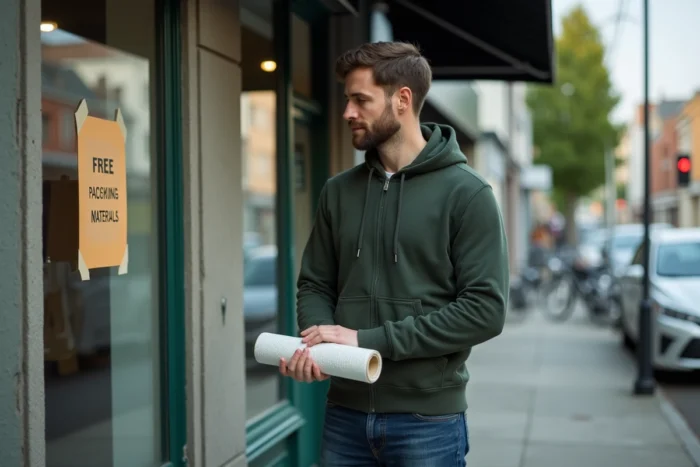
Free bubble wrap from local e-commerce businesses
Small and medium-sized enterprises (SMEs) that sell online receive deliveries from suppliers packaged with bubble wrap in large quantities. Jewelers, sellers of spare parts, refurbished tech shops: these order preparation workshops accumulate a surplus of cushioning material that they are looking to get rid of.
Unlike large retailers, these small businesses do not have organized recycling channels. The bubble wrap piles up in the back room or in a storage area and ends up in the dumpster. Offering to collect this surplus benefits everyone.
How to identify them in your area
We are not talking about e-commerce giants, but local businesses visible on marketplaces or that manage their shipments from a workshop in an industrial area. Here are a few concrete leads:
- Second-hand phone or computer shops that receive their parts in thick, reusable bubble wrap
- Creator workshops (ceramics, glassware, jewelry) whose raw material suppliers ship with reinforced cushioning
- Wine cellars or gourmet grocery stores that receive bottles individually protected by bubble film
A personal visit with a quick explanation (moving, parcel shipping) is usually enough. Responses vary on this point, but you often walk away with an entire bag of bubble wrap in a single visit.
Collecting bubble wrap through local online support groups
Donation platforms and neighborhood Facebook groups are an underutilized channel. People who have just moved or received a large purchase (appliances, furniture) often find themselves with bubble wrap they don’t know what to do with.
Posting a specific request works better than a vague message. Indicating the approximate volume needed, the deadline, and the neighborhood significantly increases the chances of a response. It has been observed that announcements like “I’m collecting your packaging” in local support groups generate offers within hours, especially during back-to-school season or after the holiday season.
Check the condition of the collected bubble wrap
Not all free bubble wrap offers the same level of protection. Before packing your fragile items, a few quick checks are necessary:
- Press the bubbles: if more than half are already popped, the film hardly protects against shocks
- Check for continuous tears across the width of the roll, which weaken the entire sheet
- Avoid damp or grease-stained films, which could damage surfaces in prolonged contact
- Prefer bubble wrap with large bubbles for dishes and frames, and small bubble film to fill empty spaces in boxes
Bubble wrap and moving: optimizing the quantity collected
For a complete move, the amount of bubble wrap needed directly depends on the number of fragile items and the size of the home. You often need more material than you initially think, especially for the kitchen and decorative items.
The most effective strategy is to start collecting three to four weeks before the moving date. Combining several sources (a collection point visited each week, a local business contacted, a post in a support group) allows you to build up a sufficient stock without spending a dime.
If despite these efforts the volume remains insufficient, crumpled newspaper and old sheets serve as a complementary cushioning material for less delicate items. Reserving bubble wrap for truly fragile items (glassware, mirrors, electronic devices) prevents waste and optimizes every meter of film collected.
Collecting free bubble wrap requires a bit of foresight, not a budget. Parcel collection points, small e-commerce businesses, and neighborhood groups cover most needs, even for a large home. The only real investment is the time spent asking, and most people are happy to get rid of a bulky material.