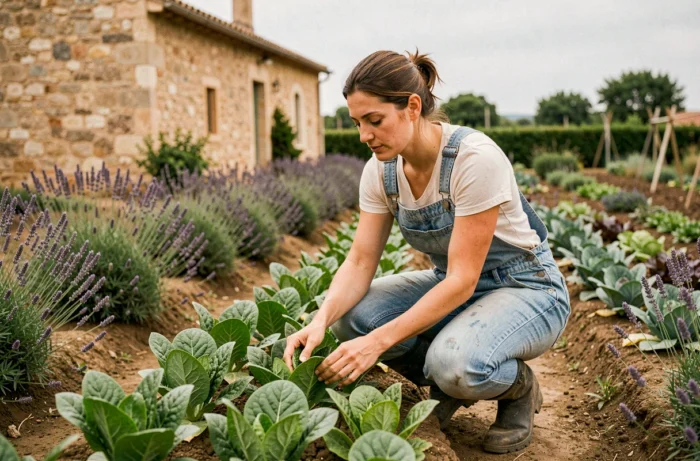
Sustainable agriculture in France is no longer limited to organic farming. Since 2024, a new generation of public programs has restructured agricultural practices around reducing chemical inputs, preserving soils, and adapting to climate change. These initiatives mobilize funding on an unprecedented scale and redefine the link between agricultural production and landscape.
Ecophyto and Biocontrol Programs: The New Budgets for Agricultural Transition
The French regulatory framework has shifted towards targeted programs with verifiable budgets. The PARSADA initiative, integrated into national ecological planning, receives 146 million euros to research and disseminate combined solutions for reducing phytopharmaceutical products directly in farming.
The PRAAM program, funded with 90 million euros by France 2030, aims to implement combinations of innovative technical levers among farmers. The Grand Défi biocontrol and biostimulation completes this triptych with 42 million euros earmarked for replacing chemical inputs with biocontrol solutions.
The first finalized results from PARSADA are not expected until late 2027. The transition is therefore underway, but its concrete effects on agricultural landscapes remain to be measured. Professionals wishing to track the evolution of these sectors and their implications on the ground can consult agriculture-et-paysage.fr, which documents these dynamics at the intersection of agronomy and landscape planning.
Payments for Environmental Services: Compensating Farmers Differently
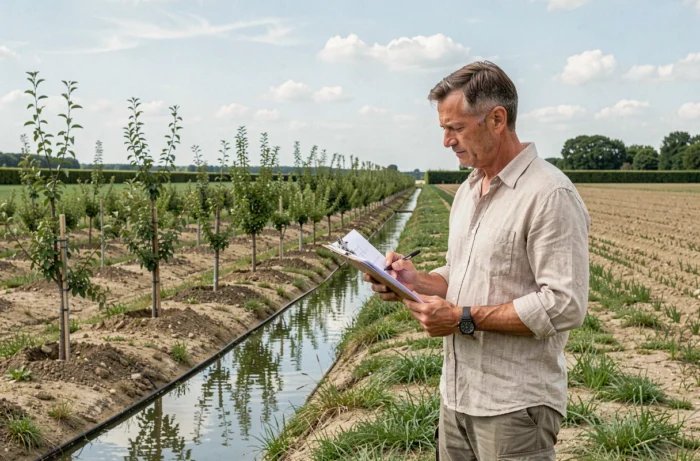
Compensating farmers for the services they provide to the environment represents a paradigm shift. Payments for Environmental Services (PES) are gradually moving out of the experimental phase to become part of the tools of the common agricultural policy applied in France.
The principle is straightforward: a farmer who maintains hedges, restores wetlands, or reduces soil erosion receives financial compensation based on the measured ecological service. This mechanism alters the traditional subsidy logic, which compensated cultivated area rather than environmental impact.
Several regions are experimenting with these mechanisms using cross-financing (water agencies, local authorities, European funds). The main challenge remains the reliable measurement of the service provided: without robust indicators, the risk of flat-rate payments disconnected from the reality on the ground persists.
Goal of Zero Net Artificialization and Agricultural Spaces in France
The Climate and Resilience Law has enshrined the goal of zero net artificialization of soils by 2050 into French law. For agriculture, this regulatory constraint has concrete consequences for agricultural land and urban planning.
Urban planning documents (PLU, SCoT) must now incorporate quantified trajectories for reducing the consumption of natural, agricultural, and forest spaces. A recent implementing decree simplifies the adaptation of these documents, but the implementation remains complex for rural communities that must balance economic development and the preservation of agricultural land.
The triennial reports on artificialization, supported by land use data (OCS GE), allow for more precise monitoring of land consumption. This traceability strengthens the position of farms in land use negotiations.
Agroecological Infrastructures and Biodiversity on Farms
Preserving land is not enough if the plots themselves lose their ecological quality. Agroecological infrastructures (hedges, grassed strips, ponds, isolated trees) play a documented role in maintaining biodiversity and the natural regulation of pests.
The Grand Est region, for example, benefits from specific European support for the creation and maintenance of these infrastructures in vineyard areas. These aids are conditional on multi-year commitments to maintenance, stabilizing the landscape network over several crop cycles.
Dryness and Climate Adaptation: The Agricultural Emergency Plan in France
The summer of 2026 triggered a major drought episode that led the government to unlock over one billion euros to support affected farmers. This emergency plan covers several aspects:
- Direct aid to the most affected farms, particularly those whose crops and yields have suffered significant losses due to water deficits.
- Support for investment in more water-efficient irrigation systems and soil management techniques that promote water retention.
- Specific support for livestock sectors facing feed shortages and rising animal feed costs.
Agricultural unions deemed this funding insufficient given the extent of the damage. This episode illustrates a structural trend: extreme climate events are becoming a recurring parameter in the management of agricultural operations in France, rather than an exception.
Precision Agriculture and Digital Data for Sustainable Landscapes
Precision agriculture relies on the collection and analysis of data (sensors, satellite imagery, drones) to adjust interventions plot by plot. This approach reduces the volumes of inputs applied by targeting areas that truly need them.
The development of this sector in France relies on various actors: cooperatives, specialized startups, and public programs like France 2030. Soil mapping technologies, combined with data on agricultural land use, also allow for integrating the landscape dimension into production decisions.
The issue is not the technology itself but its accessibility for medium-sized farms, which represent the majority of the French agricultural fabric. The cost of equipment and training for farmers remain identified barriers for support actors.
The convergence between reducing pesticides, preserving land, compensating for ecological services, and climate adaptation outlines a coherent framework, but its implementation depends on the ability of territories to coordinate these initiatives. The first consolidated assessments, expected in the coming years, will help measure whether these trends sustainably transform French agricultural landscapes or remain confined to local experiments.