A child struggling to form a sentence, an adult losing their words after a stroke: language disorders take very different forms depending on age and the origin of the problem. Speech therapy offers rehabilitation tailored to each situation, with methods that have evolved significantly in recent years.
Developmental Language Disorder: What the New Diagnosis Changes
You may have already heard the term “dysphasia” to describe a child who speaks with difficulty. This term is gradually disappearing from professionals’ vocabulary. It is being replaced by developmental language disorder (DLD), a more precise designation.
The difference is not just a change of label. DLD is defined by the persistence of difficulties beyond the age of six and their concrete impact on daily life: understanding in class, the ability to recount an event, the quality of social interactions. The speech therapist no longer relies solely on standardized tests. They also use observation grids in school or family settings to measure the actual impact.
This paradigm shift encourages evaluating language in its context of use, not just in the office. A child may succeed in an isolated exercise but fail to follow a complex instruction in class. It is this second dimension that rehabilitation now targets as a priority. Specialized structures like centre-logos.fr support patients in this comprehensive approach, coordinating assessment and personalized follow-up.

Speech Therapy for Children: Concrete Methods and Session Structure
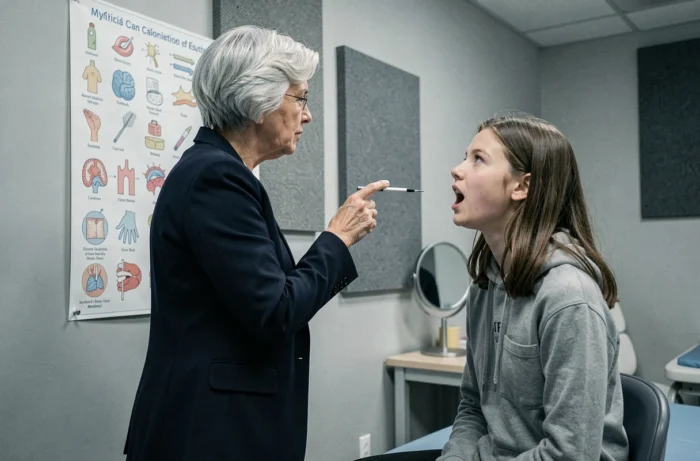
Before working on a sound or sentence structure, the speech therapist conducts a comprehensive assessment. This assessment evaluates oral comprehension, vocabulary, syntactic construction, and verbal working memory. It serves as a starting point for setting measurable goals.
Rehabilitation Sessions: What the Work Looks Like
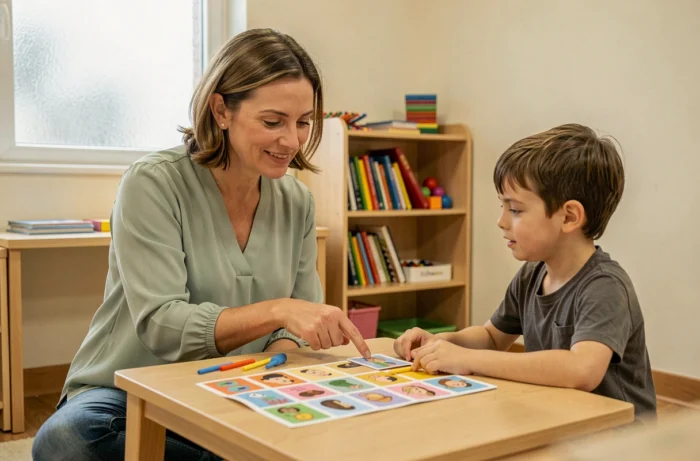
Sessions typically last half an hour. For young children, play is the main support for rehabilitation. The speech therapist uses adapted board games, picture books, and stories to complete. The goal is never to “teach” but to create natural communication situations.
An example: for a child who omits articles before nouns, the speech therapist might suggest a shopkeeper game. The child must ask for “an apple” or “the bread” to obtain the item. Repetition in a playful context anchors the structure without the child feeling like they are working.
For written language, rehabilitation relies on spelling regularity and derivational morphology. The idea is to show that spelling follows identifiable logics, not a set of arbitrary rules to memorize.
Frequency and Duration of Follow-Up
The care varies depending on the severity of the disorder. Here are common guidelines:
- Mild disorder (simple speech delay): one session per week for a few months is often enough to unblock the situation.
- Moderate disorder (DLD with school impact): two weekly sessions are common, with follow-up that can extend over several years.
- Severe disorder (almost total absence of oral language): rehabilitation is intensive and may include alternative communication tools (pictograms, dedicated applications).
The regularity of sessions matters more than their number. A child who comes once a week without interruption progresses better than a child who is followed irregularly.
Language Rehabilitation in Adults After a Brain Injury
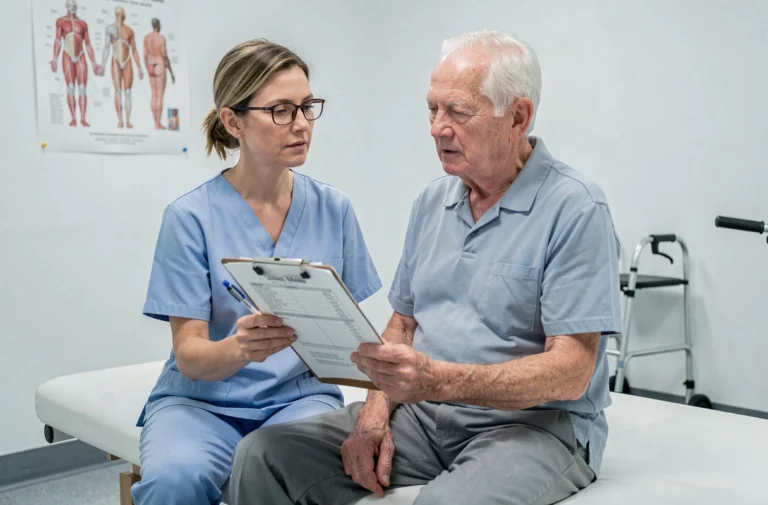
In adults, language disorders most often occur after a stroke, a head injury, or within the context of a neurodegenerative disease. The most common clinical picture is aphasia, a partial or total loss of the ability to understand or produce words.
The goal of rehabilitation is to restore effective communication means. When complete recovery is not possible, the speech therapist works on compensatory strategies: reformulation, use of gestures, reliance on visual supports.
What Distinguishes Adult Rehabilitation from Pediatric Care
In children, the brain is still developing, and neural plasticity facilitates learning. In adults, rehabilitation relies on already formed language circuits that need to be reactivated or bypassed. The work is often slower, but progress remains possible even months after the injury.
The surrounding environment plays a crucial role. The speech therapist trains relatives in good communication practices: speaking slowly, allowing response time, avoiding finishing sentences for the patient. These daily adjustments prolong the effect of the sessions.
Training of Speech Therapists and Framework for Neurodevelopmental Disorders
Since the national strategy “neurodevelopmental disorders” 2023-2027, language disorders are integrated into a common framework for managing NDDs. National training guidelines have been defined to harmonize the practices of professionals, including speech therapists.
This framework encourages coordination among speech therapists, teachers, psychologists, and doctors. Ideally, a child with DLD benefits from a personalized support plan at school, developed in conjunction with the speech therapist overseeing the rehabilitation.
In terms of pricing, several language rehabilitation acts have been revalued (amendment 19 to the national convention). Sessions for the rehabilitation of communication and written language disorders are now coded AMO 11.6, and those for graphic disorders AMO 11.5. This revaluation recognizes the technicality of speech therapy work and may facilitate access to care.
Speech therapy is not a disguised tutoring service or a simple speech training. It is a complete care process, whose effectiveness depends on the precision of the initial assessment, the regularity of follow-up, and the involvement of the surrounding environment. Consulting early remains the best lever to limit the impact of language disorders on learning and social life.