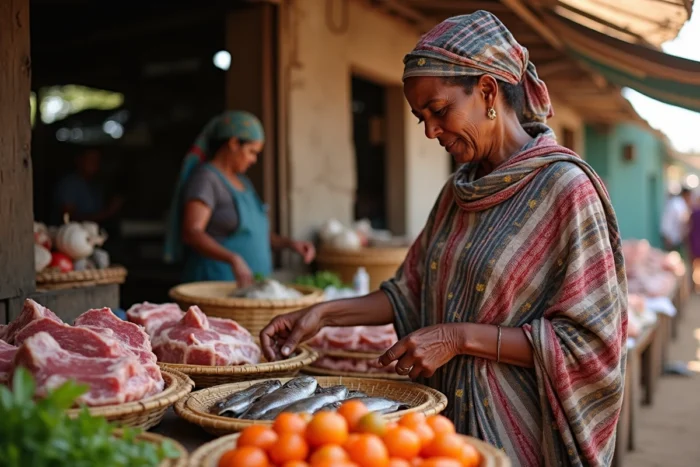
In Madagascar, rice is the basis of nearly all meals, from breakfast to dinner. The animal proteins that accompany it vary by region, economic means, and a system of prohibitions called fady. Among these prohibitions, the one that affects pork remains the most visible to foreign visitors, even though pigs are raised in several areas of the island.
Food Fady in Madagascar: a system of prohibitions, not just a superstition
The word fady refers to a prohibition passed down from generation to generation, linked to respect for ancestors and the preservation of social order. Each fady is localized: it can concern a family, a clan, a village, or an entire region. It is not a unified religious code comparable to the dietary prescriptions of Islam or Judaism.
A food fady dictates what an individual or group must not consume. The prohibition sometimes concerns a specific animal (pork, eel, lemur), sometimes a plant food, and sometimes a mode of preparation. Transgressing a fady exposes, according to belief, to collective misfortunes that affect the family or lineage, not just the individual at fault.
To better understand food traditions in Madagascar, one must keep this collective dimension in mind: the fady is not a personal choice; it is a commitment to the group.

Pork and fady in northern Madagascar: the origin of the taboo
The prohibition on pork is particularly pronounced in the northern part of the island, especially among the Antakarana and Sakalava. According to the legend recounted by oral tradition, a founding ancestor was saved from mortal danger by a pig (or, in other versions, betrayed by this animal). The story varies from village to village, but the conclusion remains the same: the pig becomes a symbolically charged animal of misfortune.
The prohibition is not based on a hygienic analysis. It is part of a mythical narrative that associates the pig with a founding event of the clan. Touching, preparing, or consuming pork symbolically reactivates this harmful episode.
A geographically uneven prohibition
In the Central Highlands, around Antananarivo, pork is more widely consumed. It can be found grilled by the roadside or cooked in a stew with cassava. The difference is clear: the same animal can be a common dish in one region and an absolute prohibition just a few hundred kilometers away.
This geographical variation distinguishes Malagasy fady from universally applicable food prohibitions. The taboo on pork is not national but regional and clan-based, which explains the frequent confusion among outside observers who mistakenly generalize the prohibition to the entire island.
Economic and health factors limiting pork consumption
Beyond the fady, very concrete reasons limit the place of pork in the Malagasy diet, especially in urban areas in recent years.
- The rise in food prices, exacerbated after the global health crisis, has pushed many households to turn to less expensive proteins like fish, legumes, or chicken.
- Veterinary control remains weak in much of the country. Pork, sensitive to parasitic infections when poorly stored or insufficiently cooked, raises concerns among households aware of the risks of food poisoning.
- Local public health campaigns encourage dietary diversification and highlight legumes as accessible protein sources, which indirectly reduces pressure on red meats and pork.
The decline in pork consumption in cities is both economic and cultural. An urban Malagasy household that limits pork does not necessarily do so out of respect for a fady: the price per kilo often suffices to explain the choice.
Rice, zebu, and the hierarchy of proteins in Malagasy cuisine
To understand the marginal place of pork, one must first measure the place of rice. Rice accompanies everything. A meal without rice is not considered a real meal in the majority of Malagasy households. The laoka (side dish) comes as a complement, and its composition depends on the family budget.
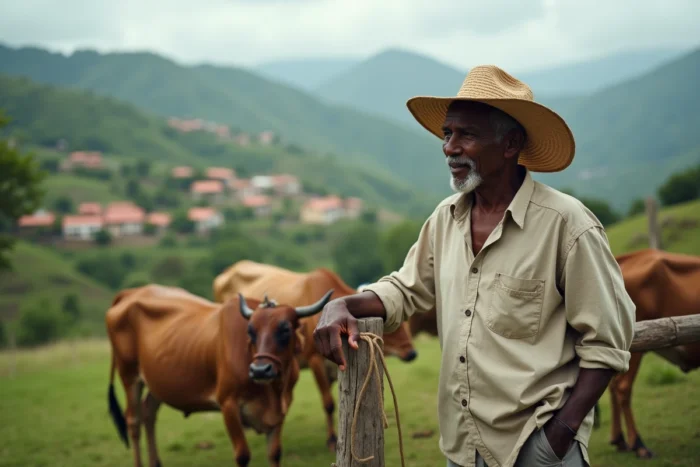
The zebu occupies the top of the symbolic hierarchy of meats. A prestigious animal, the zebu is sacrificed during ceremonies and funerals. Its meat is associated with important events. Chicken comes next, followed by fish in coastal regions. Pork, when not under prohibition, is lower in this cultural hierarchy.
The ongoing dietary diversification
Local nutrition actors encourage the consumption of legumes (beans, lentils, Cape peas) as a protein alternative. This trend, driven by public health concerns and purchasing power, is slowly changing the composition of laoka in urban and peri-urban areas.
The result is a food landscape where pork has never held a dominant place, even in regions where no fady prohibits it. The combination of a strong cultural prohibition in the north, a hierarchy of meats favoring zebu and chicken, and recent economic pressure results in structurally low pork consumption across the island.
This overlap of cultural, economic, and health factors makes the Malagasy situation unique compared to other countries in East Africa or Southeast Asia where pork is either massively consumed or uniformly prohibited. In Madagascar, the response depends on the region, the clan, and the wallet.